Thoughts on… Lynda Hull, “Accretion”
"the crows’ reflected flight"

Thoughts on… Lynda Hull, “Accretion”
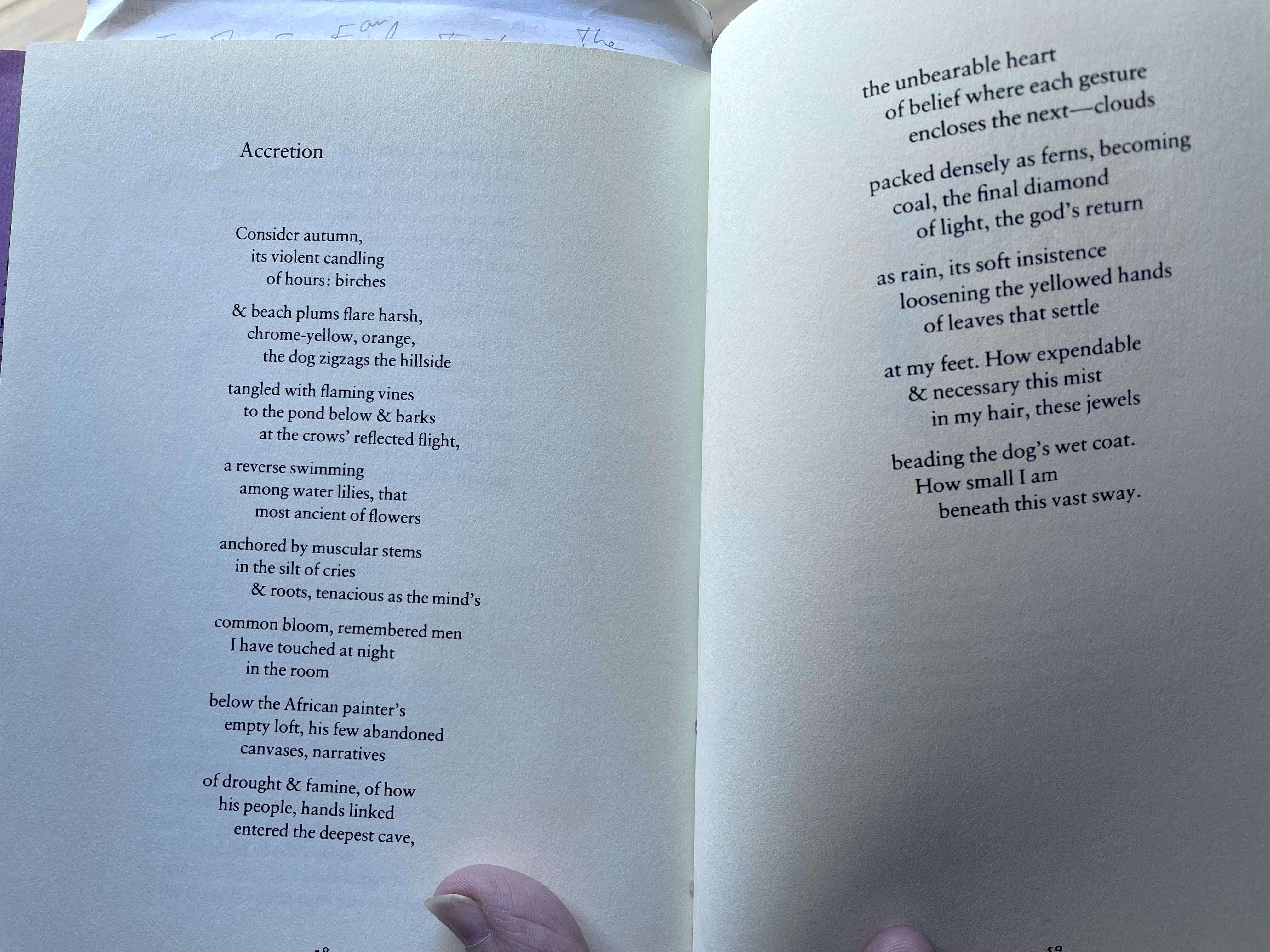
(The poem is attached to show the progressive indentations of the 2nd and 3rd lines of each stanza – a form which Hull employed in many works.)
Accretion
Consider autumn,
its violent candling
of hours: birches
& beach plums flare harsh,
chrome-yellow, orange,
the dog zigzags the hillside
tangled with flaming vines
to the pond below & barks
at the crows’ reflected flight,
a reverse swimming
among water lilies, that
most ancient of flowers
anchored by muscular stems
in the silt of cries
& roots, tenacious as the mind’s
common bloom, remembered men
I have touched at night
in the room
below the African painter’s
empty loft, his few abandoned
canvases, narratives
of drought & famine, of how
his people, hands linked
entered the deepest cave,
the unbearable heart
of belief where each gesture
encloses the next—clouds
packed densely as ferns, becoming
coal, the final diamond
of light, the god’s return
as rain, its soft insistence
loosening the yellowed hands
of leaves that settle
at my feet. How expendable
& necessary this mist
in my hair, these jewels
beading the dog’s wet coat.
How small I am
beneath this vast sway.
*
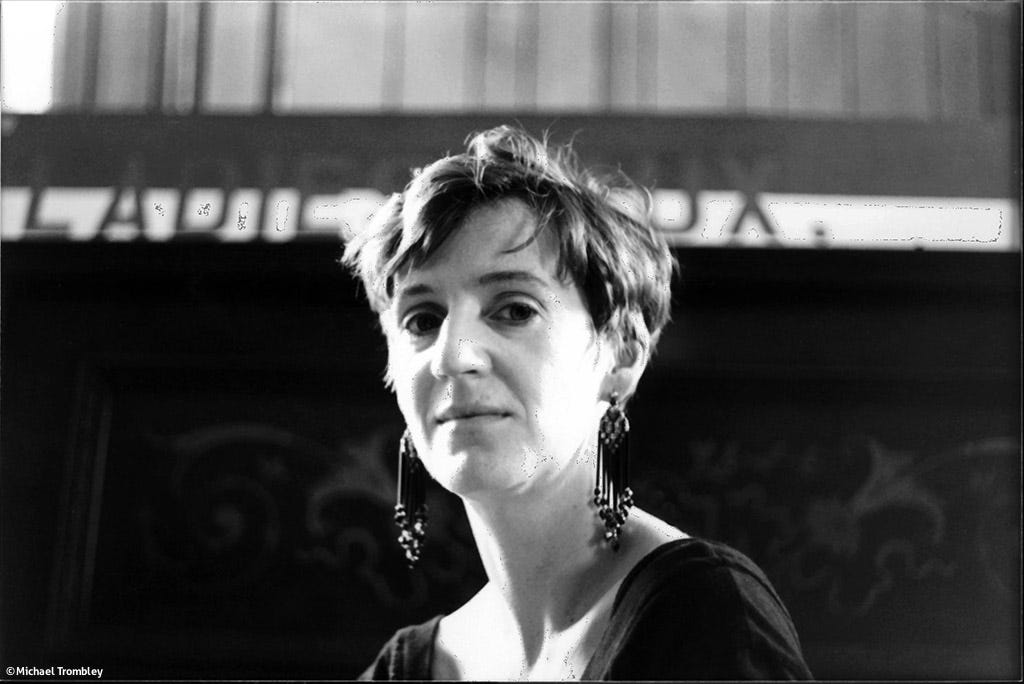
Lynda Hull, who died in a car wreck in 1994 at the age of 39, remains one of the strongest poets of late 20th Century America – publishing two books in her lifetime, leaving behind a finished masterpiece, The Only World, which was a finalist for the 1995 National Book Critics Circle Award after its posthumous publication. Her writer’s voice creates a raw view of the world with perfect control of poetic form. She is in the tradition of Emily Dickinson, Hart Crane (her favorite poet), and Elizabeth Bishop. Hull’s language is a great cauldron of pathos, empathy, tragedy, and beauty. To read Lynda Hull is to enter and to know her world. It’s an insider’s view.
“Accretion,” a poem from her first collection Ghost Money, winner of the 1986 Juniper Prize, is a good representative of Hull’s melding her deep love of language with an intense writing focus. Her sense of landscape, even when fusing disparate places, is clear and connected: hillside colors, painter’s canvas, pond, reflection of crows, flowers, apartment, bodies, cave. Mist on the hair, mist on the dog’s coat, the clouds. The touch at night – created by a series of connections: leaves, vine, sex – becomes a trope for the creative force of the artist, of the poet. Life is at work in darkness – below the pond’s surface, on the empty canvas, inside the cave. The progression of images in the poem’s second half is amazing – clouds to fern, coal to diamond to light. This shift is in preparation for the rain with “its soft insistence / loosening the yellowed hands / of leaves”. Hull then focuses the reader’s attention on the speaker’s feet – another image that expresses change, shift, and understanding.
Hull’s gift as a poet is evident in lines such as “the unbearable heart / of belief where each gesture / encloses the next”. There’s no need to comment. If the reader is patient, the voice in the poem is as effective a mentor as one could ever hope to have.
The closing lines echo my own being: “small … beneath this vast sway”.
Her writing deserves and rewards slow reading. Thank you for introducing me to a great writer!